



Brooke Race Exhausts Inconel Explained: Inconel vs Titanium vs Stainless Steel
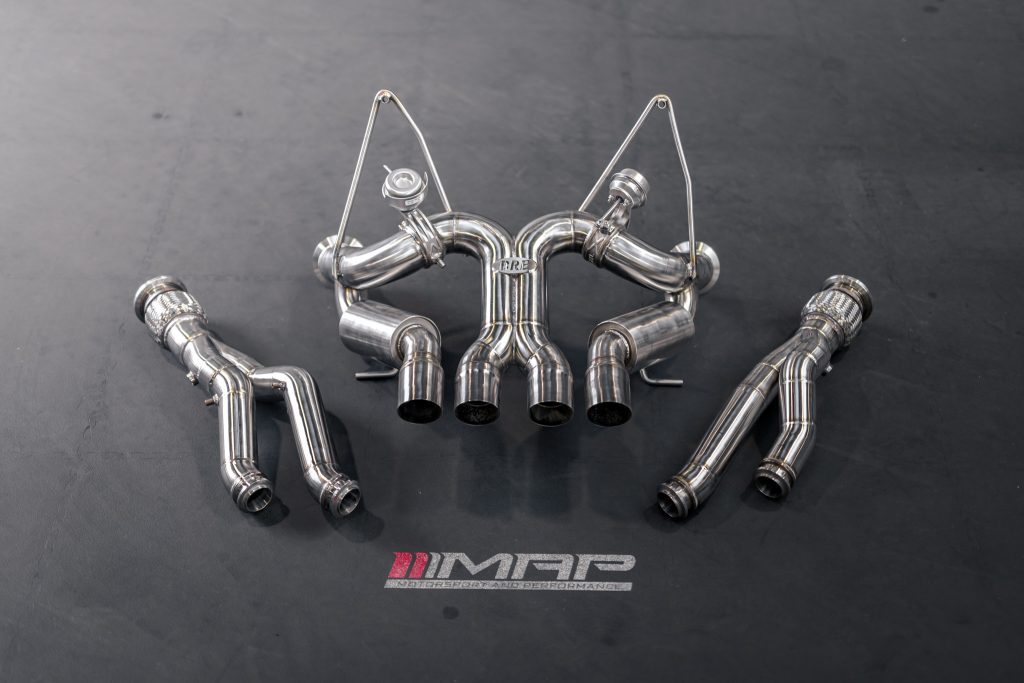
Short answer: Inconel is a nickel-chromium superalloy that keeps its strength at temperatures that would soften stainless steel and titanium. That means an exhaust can be made from much thinner tube, so a well-made Inconel system is usually lighter than the factory one, and it sounds sharper too. It’s also the most expensive of the three and the hardest to build with, which is why you mostly find it on supercars, hypercars and race cars.
Inconel comes up a lot when we’re talking exhausts with supercar owners. Usually it’s mentioned alongside the words “Formula 1”, and a price that makes people look twice.
The question we get asked isn’t normally whether Inconel is better. It’s whether it’s worth it for your car, and how it really stacks up against titanium or a good stainless system.
So here’s how we explain it in the workshop.
What is Inconel?
You don’t need a metallurgy degree to choose an exhaust, but it helps to know what you’re paying for.
Inconel is a family of nickel-chromium “superalloys”, designed to work in extreme heat in places like jet engines, gas turbines and racing exhausts. The grade you’ll usually see on performance exhausts is Inconel 625. It’s mainly nickel, with chromium and molybdenum, plus a little niobium that adds strength.
What matters for an exhaust is simple: it keeps its strength, and resists corrosion and fatigue, at very high temperatures. Steel and titanium start to soften and lose strength much sooner as they get hotter.
Why exhaust material matters on a supercar
Every supercar that comes through our workshop puts its exhaust through a hard life, especially the twin-turbo ones. The pipework sits right next to the engine and turbos, gets extremely hot, cools down and heats up again every drive, and vibrates the whole time. That constant heating and cooling is what eventually cracks welds and fatigues thin metal.
There are two ways to deal with it. You can use thicker, heavier tube, which is what most factory systems do. Or you can use a material that copes with the heat so well that the tube can be made much thinner. That’s where Inconel comes in.
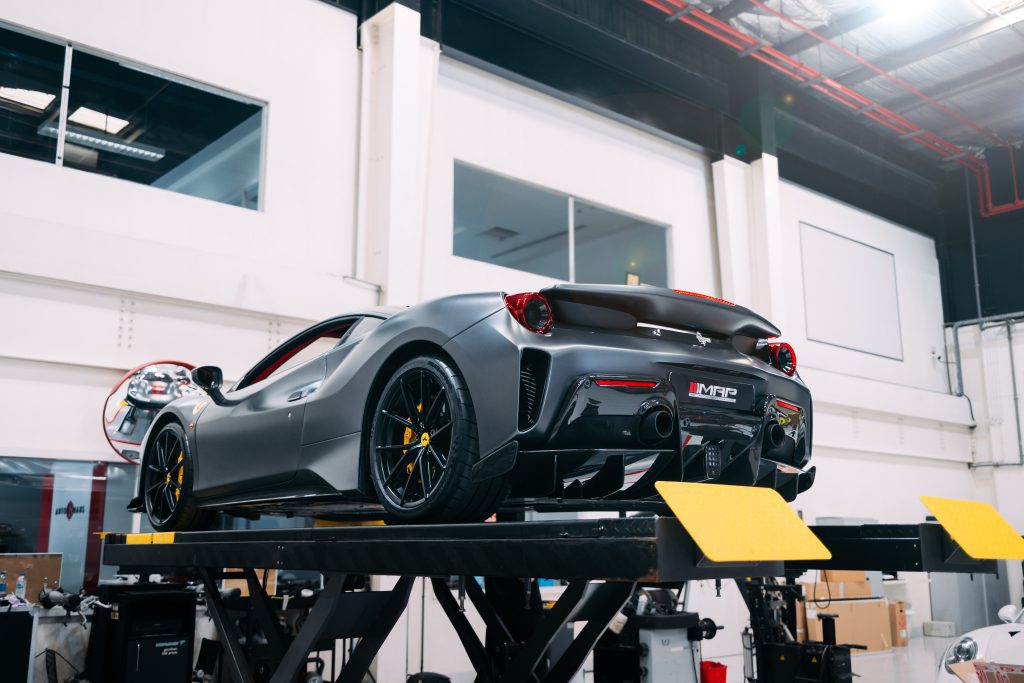
A Ferrari 488 in our workshop. Mid-engined, twin-turbo supercars put their exhausts through extreme heat.
Inconel vs titanium vs stainless steel
| Inconel 625 | Titanium | Stainless steel | |
|---|---|---|---|
| Density | About 8.4 g/cm³ | About 4.5 g/cm³ | About 8.0 g/cm³ |
| Strength when very hot | Excellent. Made for extreme heat | Strong when cooler, but loses strength faster as heat rises | Good, but needs thicker wall to cope |
| Wall thickness | Very thin | Thin | Thicker |
| Where you’ll find it | Manifolds, turbo sections and full systems on supercars and race cars | Mostly the cooler rear sections, silencers and tailpipes | Most factory and aftermarket systems |
| Building it | Specialist welding, slow and skilled | Specialist welding | Straightforward |
| Cost | Highest | High | Lowest |
Hang on, Inconel is heavier than steel?
Yes, and this is the bit most people don’t expect. For the same volume, Inconel is slightly heavier than stainless steel and nearly twice as heavy as titanium.
The weight saving comes entirely from wall thickness. Inconel is strong enough at temperature that the tube can be made far thinner than a factory stainless system, so the finished exhaust carries much less metal. Brooke Race Exhausts, for example, build their systems in 0.9mm Inconel 625 and quote them at up to 40% lighter than OEM.
Titanium can still make a very light exhaust, and it’s a great choice for rear sections and silencers. Where Inconel really earns its money is in the hottest part of the system, near the engine and turbos, and on cars that see a lot of track time.
What about the sound?
Thin-wall Inconel is prized in motorsport for its sharp, crisp, almost metallic note. Owners and builders consistently describe it as cleaner and more “race car” than a heavier stainless system.
That said, sound is personal, and the design of the system (X-pipe or H-pipe, valved or non-valved, silencers or not) makes more difference than the material on its own. That’s why we’d always rather you hear a system before you commit. Our GT3 RS video further down is a good place to start.
What would we recommend?
Talk to us about how you actually use the car. Is it a weekend road car, a track-day car, or a bit of both? Tell us what you like about how it sounds now, and what you’d change.
- High-heat, high-performance cars such as twin-turbo McLarens, Ferraris and Lamborghinis, GT Porsches and anything that sees regular track days are where Inconel makes the most sense.
- If you mainly want a lighter, great-sounding rear section and your car doesn’t run extreme exhaust temperatures, titanium can be the better buy.
- For most road cars, a good stainless system is still the sensible choice, and a big step up from many factory exhausts.
“We’d rather fit the right exhaust for how you use the car than the most expensive one.”
If a stainless system gets you everything you’re after, we’ll tell you. If you want the lightest, sharpest-sounding system you can fit, we’ll talk you through Inconel. Either way, the fit, the finish and the sound come down to the maker’s design and build quality just as much as the material.
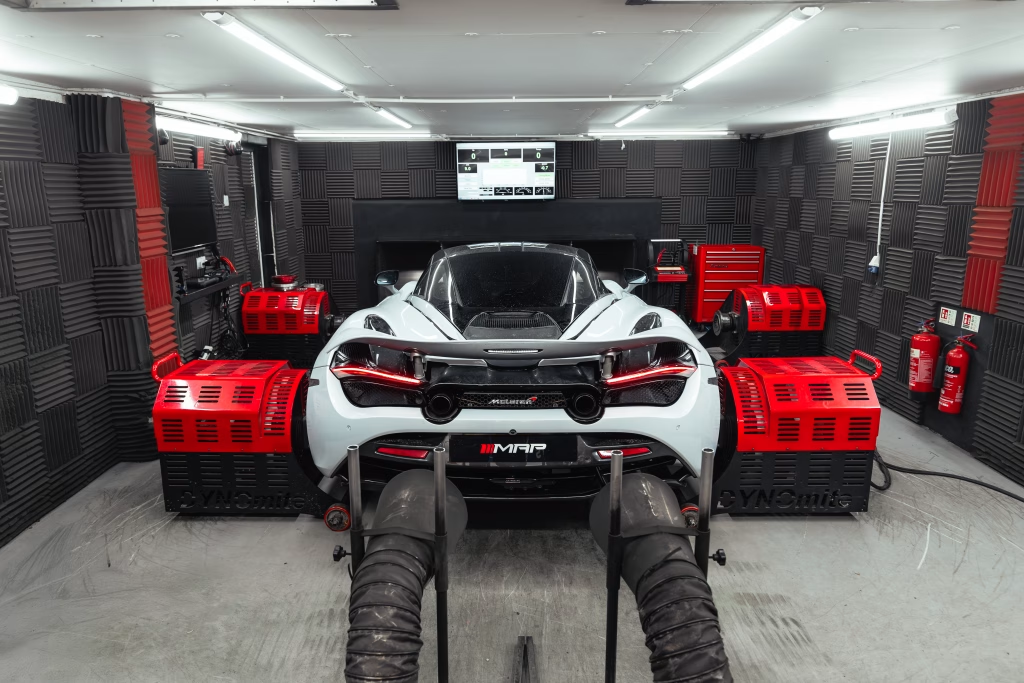
A McLaren 720S on our dyno. High-performance twin-turbo cars are where Inconel makes the most sense.
Why we fit Brooke Race Exhausts
When customers want Inconel, we supply and fit Brooke Race Exhausts. Every BRE system is designed in-house and hand-built to order from 0.9mm American military-specification Inconel 625, with stainless steel used only where it makes sense, for parts such as flanges, hangers and silencer components. That attention to detail shows in the fit, the finish and the sound.
Watch: a Brooke Race Exhausts Inconel full system fitted to a Porsche 992 GT3 RS in our workshop.
Popular BRE Inconel systems include:
- McLaren 720S Inconel rear X-pipe
- Ferrari 488 Inconel rear X-pipe
- Lamborghini Huracán STO Inconel rear X-pipe
- Porsche 992 GT3 RS Inconel RSR full system
See the full BRE range by car, from the McLaren 570S to the Ferrari SF90 and Lamborghini Aventador. We’ll confirm current lead times when you order.
Your Questions, Answered
An exhaust made from Inconel, a nickel-chromium superalloy, usually grade 625. It keeps its strength at extreme temperatures, so the tube can be made much thinner and the system lighter than a typical factory exhaust.
For the hottest parts of a system, such as manifolds, turbo sections and cars that see a lot of track use, Inconel is generally the better material because it holds its strength at higher temperatures. Titanium is lighter for the same volume and is an excellent choice for cooler rear sections and silencers.
Inconel costs far more than stainless steel as a raw material, and it is harder to form and weld. A good Inconel system needs slow, skilled welding, and most are hand-built to order.
Not for the same volume. Inconel is slightly denser than stainless steel. The weight saving comes from wall thickness: Inconel is strong enough to be used in much thinner tube, so the finished system carries less metal. Brooke Race Exhausts quote their 0.9mm Inconel 625 systems at up to 40% lighter than OEM.
Volume depends mostly on the design, such as silencers, valves and pipe layout. Thin-wall Inconel is prized for a sharper, crisper tone rather than simply more volume.
Yes. We supply and fit Brooke Race Exhausts Inconel systems at our West Yorkshire workshop. Get in touch to talk through the options for your car.
Note: weight and performance figures are Brooke Race Exhausts’ own claims, not figures tested by Motorsport and Performance.
Ready to take the next step?
Know what you want? Browse BRE exhausts online.
Want to talk it through? Speak to the workshop and we’ll help you choose the right system for your car and how you use it, then fit it at our West Yorkshire workshop.