


Why Your S550 Mustang Rear Calipers Are Failing (And How to Fix It)
If you own a 2015–2023 Ford Mustang, you’ve likely heard the horror stories about rear caliper failure. It starts with a slightly loose handbrake and ends with smoke billowing from your rear wheels.
For S550 owners, especially those in the UK/EU, this isn’t just a “possibility”—it’s a common maintenance hurdle. In this guide, we’re diving deep into the technical reasons behind these failures and how to solve them before they cost you a set of discs.
The Core Issue: The S550 Spring Return Mechanism
Unlike many performance cars that use a separate drum for the parking brake, the S550 Mustang uses an integrated single-piston design. This means the same caliper handles your footbrake and your handbrake.
The most common failure point is the internal spring-return mechanism. Over time, road salt, grime, and heat cycles cause this mechanism to seize.
-
The Symptom: Your handbrake lever feels “loose” or has excessive travel.
-
The Danger: The car may roll even when the handbrake is “on,” or conversely, the pads may fail to retract, causing them to rub against the rotor while driving.
Recognising the Signs of a Seized Caliper
Don’t wait for a breakdown. Watch for these “early warning” signs that your rear calipers are on their way out:
-
Excessive Rear Heat: If one rear wheel feels significantly hotter than the other after a drive, the caliper isn’t fully releasing.
-
The “Thudding” Sound: At low speeds, a sticking caliper can cause a rhythmic thudding or grinding sound as the pads drag.
-
Poor Fuel Economy: A dragging brake is essentially like driving with the “anchor” out. If your MPG has mysteriously dropped, check your calipers.
-
Uneven Pad Wear: If your inner pad is worn to the metal but the outer pad looks new, your slide pins or piston are seized.
Maintenance vs. Replacement: What the Pros Say
While some forum guides suggest simply “cleaning” the calipers, We often recommend a full replacement once the seizing begins.
The Lubrication “Catch-22”
You can prolong the life of your calipers by spraying a high-quality lubricant into the handbrake mechanism and working the lever. However, exercise extreme caution: Any lubricant that reaches the brake disc or pad surfaces will ruin your stopping power and require a full brake service.
Why You Should Replace in Pairs
If the passenger side has seized, the driver’s side usually isn’t far behind. To maintain a balanced “brake bias” and ensure the car tracks straight under heavy braking, it is best practice to replace both rear calipers simultaneously.
Don’t Forget the Front: Brembo Pin Seizure
While you’re servicing the rears, keep an eye on your front Brembo setup (standard on GT Performance Packs). The brake pins on these callipers are notorious for seizing in the housing due to heat.
Pro-Tip: During every service, have your mechanic extract, clean, and lubricate the front brake pins. If they seize completely, you may be forced to replace the entire Brembo unit just to change your pads.
Upgrade or OEM?
When it comes time to fix the issue, you have three main paths:
-
Genuine Ford OEM: The safest bet for fitment and factory-spec performance.
- Remanufactured Units: The most cost effective soluction for fitment and factory-spec performance.
-
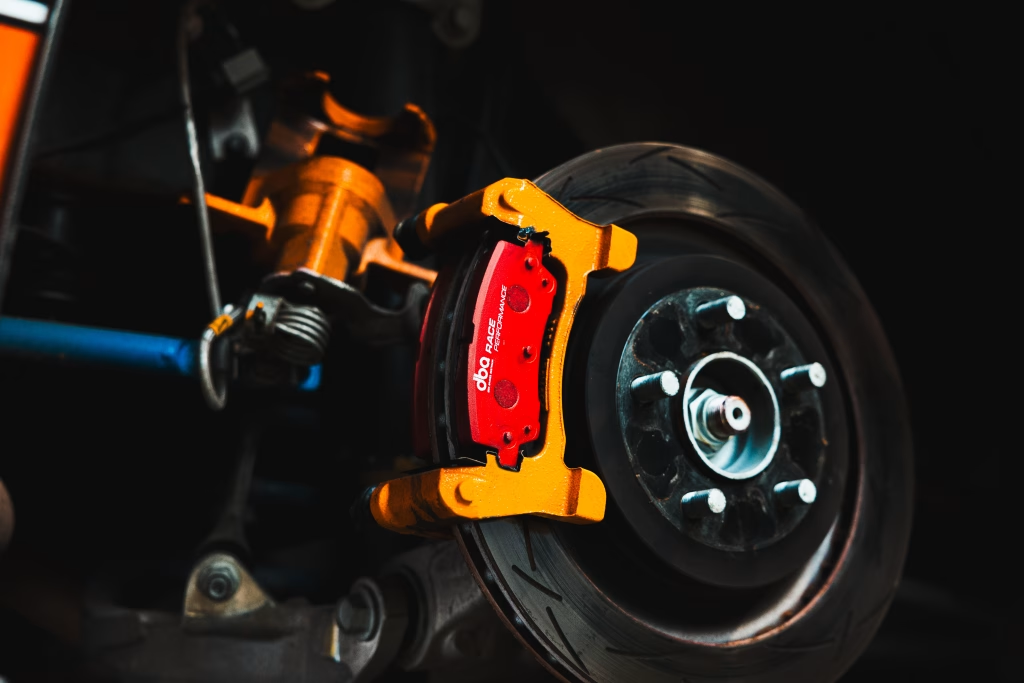
Upgraded Remanufactured Units: Often powder-coated (in red or custom colours) and fitted with superior EPDM high-temp seals to handle track-day heat better.
-
The GT350 Swap: A popular but expensive upgrade for those looking for a dedicated multi-piston rear setup.
The S550 Mustang is a world-class platform, but its rear braking system requires close attention. By catching a seized mechanism early, you save yourself the cost of new discs and the headache of a “roll-away” accident.
Are you experiencing a “sticky” handbrake? Contact us for a diagnosis.